Linking Chromospheric Conditions to Coronal Composition: IRIS and EIS Observations of the Inverse FIP Effect
Deb Baker (UCL/MSSL) and Andy To (ESA)

Combined IRIS and Hinode/EIS observations enable a multi-layer analysis of
plasma composition, linking chromospheric conditions to their manifestation in
the corona. Hinode/EIS provides spatially resolved measurements of elemental
abundances, identifying regions of FIP and inverse FIP (IFIP) effect plasma,
while IRIS probes the chromosphere where fractionation is thought to occur.
Together, these observations provide a basis for relating coronal composition to underlying
processes such as wave activity, turbulence, and magnetic reconnection
in the lower atmosphere.
The IFIP effect, characterized by a depletion of low-FIP elements [1], is rare on
the Sun but common in highly active stars whose coronae are dominated by IFIP plasma [2].
On the Sun it appears as localized patches embedded within the FIP-dominated corona,
typically associated with magnetically complex active regions, ongoing flux emergence,
and strong sunspot light bridges [3-8]. These locations suggest, but do not necessarily confirm,
sites of enhanced wave activity and low-atmosphere reconnection [9]. Current understanding
points to wave-driven processes operating below the chromospheric fractionation layer (near or even below the beta = 1 layer) as a possible origin of IFIP plasma [10].
Flares provide a means of observing this plasma by evaporating it into coronal
loops, where its composition can be measured with EIS. However, its strong
spatial localization and association with evolving magnetic structures imply that
the conditions responsible for fractionation may already be established prior to
the flare. In this sense, the flare may act primarily as a tracer of pre-existing
plasma rather than the driver of the IFIP effect. Establishing the connection
between chromospheric dynamics and coronal composition is therefore central
to understanding the origin of IFIP plasma.
IFIP Effect in AR 11967
NOAA AR 11967 provides a useful test-bed for exploring these connections. It
was a large, magnetically complex active region undergoing sustained flux emergence
and producing numerous flares, including an M2.6 event. The region was
characterized by coalescing sunspots and the formation of strong light bridges,
indicative of continued magnetic restructuring in the lower atmosphere.
Figure 1 combines EIS composition diagnostics with IRIS and SDO context
imaging to locate IFIP effect plasma within its chromospheric environment.
The IFIP effect is identified using the Hinode/EIS Ar XIV/Ca XIV line ratio.
Contours of strong IFIP effect plasma highlight localized patches at flare loop
footpoints. The location of these IFIP effect regions is indicated by the red (C2) and cyan
(C1) contours. The red contour (C2) is observed by IRIS at 21:32 UT, shortly
after flare onset, while the cyan contour (C1) is observed later at 23:16 UT,
during the decay phase.
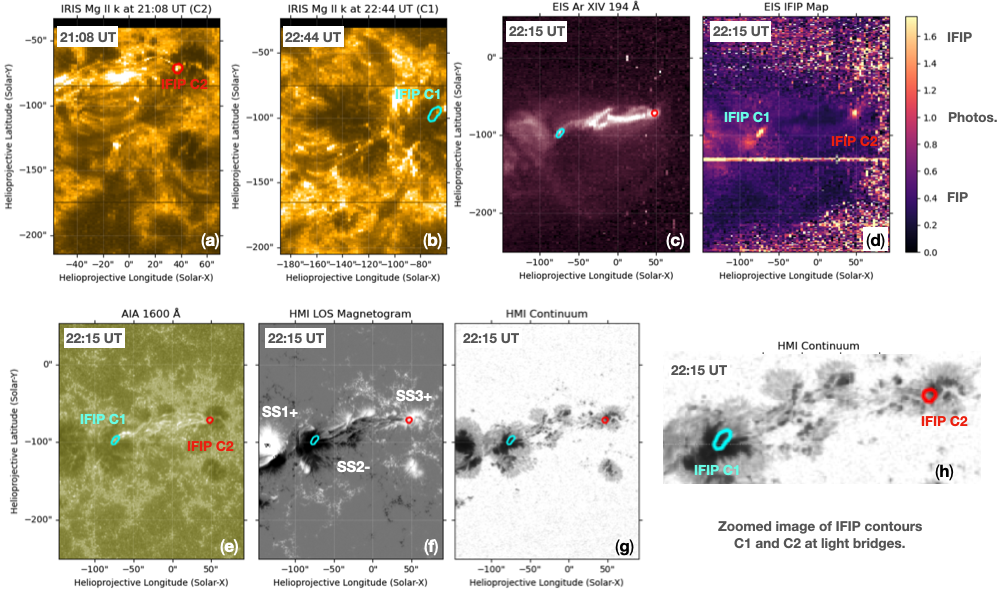
Figure 1: Multi-instrument view of IFIP plasma in NOAA AR 11967. IRIS
Mg II k intensity maps (panels a,b) provide the chromospheric context, while
Hinode/EIS Ar XIV intensity (c) and Ar XIV/Ca XIV ratio (d) maps identify
localized IFIP plasma through enhanced line ratios indicative of low-FIP depleton.
Contours of strong IFIP effect plasma derived from the EIS diagnostic are
overplotted, highlighting compact patches at the footpoints of flare loops. Corresponding
SDO/AIA and HMI images (e-h) show that these locations coincide
with sunspot umbrae and light bridges.
IRIS2+ Thermodynamic Structure
To investigate the chromospheric environment at these locations, IRIS2+ inversions
are used to derive stratified profiles of electron density, temperature, and
turbulent velocity [11-13]. Median profiles within the IFIP effect regions are compared
with the broader field of view using Mg II k intensity deciles (Q1-Q10), providing
a reference framework for typical chromospheric conditions.
In Figure 2, the IFIP effect regions correspond to the red curve (C2; rise
phase) and cyan curve (C1; decay phase). The C2 site shows enhanced densities
and temperatures relative to the decile profiles, consistent with flare-related
heating and compression. The most distinctive signature, however, is seen in the
turbulent velocity.
During the rise phase (red curve), turbulent velocity exhibits a strong enhancement
peaking relatively low in the atmosphere, indicating intense localized
dynamics in the mid-chromosphere. By contrast, the decay phase profile (cyan
curve) shows a reduced and more uniform, nondistinct structure.
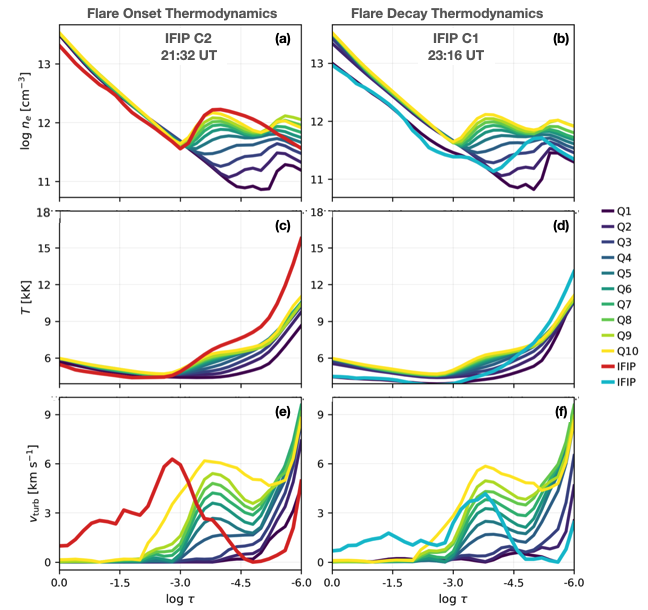
Figure 2: IRIS2+ thermodynamic structure at the IFIP effect sites. Median
profiles of electron density (a,b), temperature (c,d), and turbulent velocity (e,f)
are shown as a function of optical depth. The IFIP effect regions are highlighted
by the red (C2) and cyan (C1) curves, corresponding to sampling during the onset
and decay phases of the flare, respectively. These profiles are compared with
Mg II k intensity deciles (Q1-Q10) representing typical chromospheric conditions
across the field of view.
Discussion
The lower-altitude enhancement in turbulent velocity observed at C2 differs
from typical flare profiles, where such peaks are generally found higher in the
atmosphere. This behavior points to enhanced wave activity and energy deposition
in the mid-chromosphere, consistent with processes operating below the
fractionation layer. These findings suggest that sub-chromospheric dynamics,
including reconnection and wave generation, may play a role in establishing the
conditions required for IFIP fractionation.
This interpretation remains tentative, however, as observations capturing
both the chromospheric conditions and coronal composition of IFIP effect plasma
are limited. To date, only a small number of events have been observed with coordinated
IRIS and EIS coverage, making this one of the few cases in which such
a multi-layer comparison is possible. IFIP detections themselves are rare in the
solar atmosphere, and the subset with simultaneous chromospheric diagnostics
is smaller still. Expanding the sample of coordinated observations with IRIS and
ground based observatories will therefore be essential for determining whether
the conditions identified here are representative of IFIP effect fractionation more
generally, or specific to particular magnetic and evolutionary conditions within
individual active regions.
The full article will be published in the Royal Society topical issue titled "Solar Atmospheric
Abundances in Space & Time" due out in early July.
References
1. Brooks DH. 2018 A diagnostic of coronal elemental behavior during the inverse FIP effect in solar flares. Astrophysical Journal 863, 140. (10.3847/1538-4357/aad415)
2. Seli B, Olah K, Kriskovics L, Kovari Z, Vida K, Balazs LG, Laming JM, van Driel-Gesztelyi L, Baker D. 2022 Extending the FIP bias sample to magnetically active stars. Challenging the FIP bias paradigm. Astronomy & Astrophysics 659, A3. (10.1051/0004-6361/202141493)
3. Doschek GA, Warren HP, Feldman U. 2015 Anomalous relative Ar/Ca coronal abundances observed by the Hinode/EUV Imaging Spectrometer near sunspots. Astrophysical Journal Letters 808, L7. (10.1088/2041-8205/808/1/L7)
4. Doschek GA, Warren HP. 2016 The mysterious case of the solar argon abundance near sunspots in flares. Astrophysical Journal 825, 36. (10.3847/0004-637X/825/1/36)
5. Doschek GA, Warren HP. 2017 Sunspots, starspots, and elemental abundances. Astrophysical Journal 844, 52. (10.3847/1538-4357/aa7bea)
6. Baker D, van Driel-Gesztelyi L, Brooks DH, Valori G, James AW, Laming JM, Long DM, Demoulin P, Green LM, Matthews SA, Olah K, Kovari Z. 2019 Transient inverse-FIP plasma composition evolution within a solar flare. Astrophysical Journal 875, 35. (10.3847/1538- 4357/ab07c1)
7. Baker D, van Driel-Gesztelyi L, Brooks DH, Demoulin P, Valori G, Long DM, Laming JM, To ASH, James AW. 2020 Can subphotospheric magnetic reconnection change the elemental composition in the solar corona?. Astrophysical Journal 894, 35. (10.3847/1538-4357/ab7dcb)
8. Baker D, van Driel-Gesztelyi L, James AW, Demoulin P, To ASH, Murabito M, Long DM, Brooks DH, McKevitt J, Laming JM, Green LM, Yardley SL, Valori G, Mihailescu T, Matthews SA, Kuniyoshi H. 2024 Searching for evidence of subchromospheric magnetic reconnection on the Sun. Astrophysical Journal 970, 39. (10.3847/1538-4357/ad4a6e)
9. Toriumi S, Cheung MCM, Katsukawa Y. 2015b Light bridge in a developing active region. II.
Numerical simulation of flux emergence and light bridge formation. Astrophysical Journal 811,
138. (10.1088/0004-637X/811/2/138)
10. Laming JM. 2015 The FIP and inverse FIP effects in solar and stellar coronae. Living Reviews in Solar Physics 12, 2. (10.1007/lrsp-2015-2)
11. Sainz Dalda A, de la Cruz Rodríguez J, De Pontieu B, Gosic, M. 2019 Recovering thermodynamics from spectral profiles observed by IRIS: A machine and deep learning approach. Astrophysical Journal Letters 875, L18. (10.3847/2041-8213/ab15d9)
12. Sainz Dalda A, Agrawal A, De Pontieu B, Gosic, M. 2024 IRIS2+: A comprehensive database of stratified thermodynamic models in the low solar atmosphere. Astrophysical Journal Supplement Series 271, 24. (10.3847/1538-4365/ad1e55)
13. Sainz Dalda A, De Pontieu B. 2023 Chromospheric thermodynamic conditions from inversions of complex Mg II h & k profiles observed in flares. Frontiers in Astronomy and Space Sciences 10, 1133429. (10.3389/fspas.2023.1133429)
Next EIS Nugget »» coming soon...
TBC
Last Revised: 27-Oct-2011
Feedback and comments: webmaster
|


